Before you start
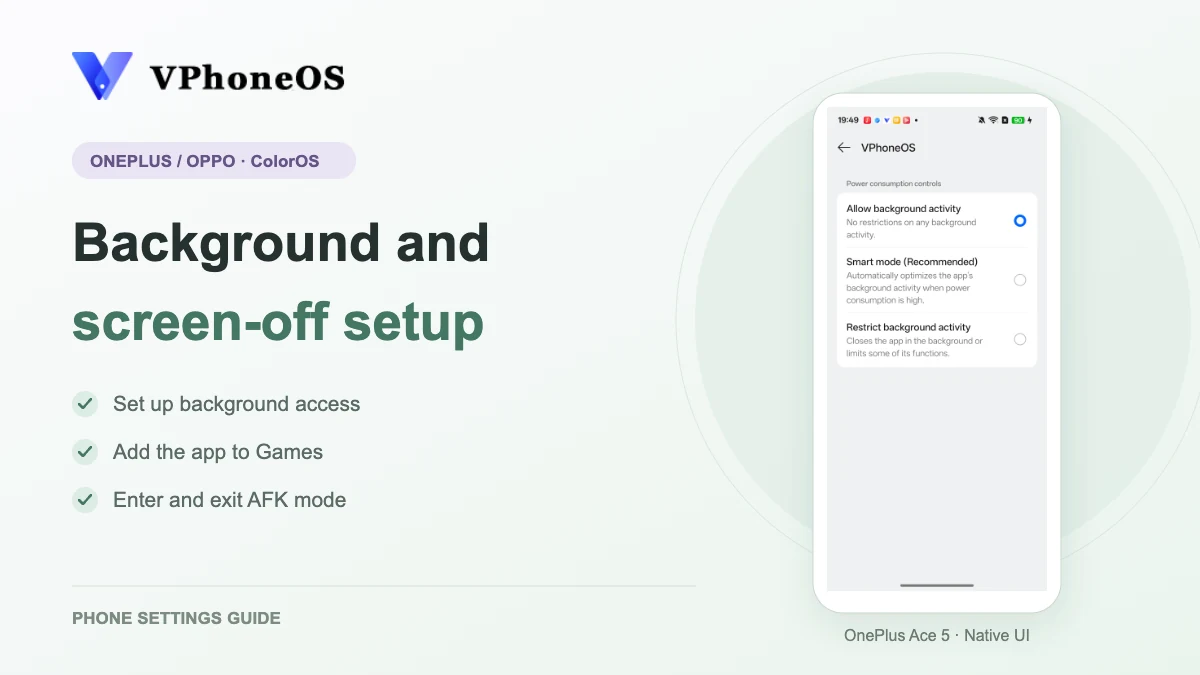
On OnePlus / OPPO, allow VPhoneOS to use background data and battery, then follow the relevant recent-app or background settings. Test after switching apps and turning off the screen. These settings do not guarantee uninterrupted operation.
Background running means an app or game inside your virtual machine keeps running after you switch to the phone’s Home screen or another app. This guide opens screen-off mode through the phone’s game tools, not the power button. Save your progress and check that your app or game works before you begin.
The background settings screenshots use a OnePlus Ace 5 with Android 16. Menus may differ on other ColorOS versions. The screen-off steps below apply to older Game Assistant versions that include those controls.
Set up background running
Allow background data and battery use, then lock the app card. If the app still stops during standby, check Sleep standby optimization.
Open VPhoneOS App info
Recent apps → VPhoneOS card menu → App info
Open VPhoneOS, then swipe up from the bottom of the phone screen and pause to open Recent apps. Find the VPhoneOS card, tap the three-dot menu along its top edge, then tap App info. If your phone uses navigation buttons, use the Recent apps button instead.
Check the result The VPhoneOS App info page shows Battery usage and Data usage.
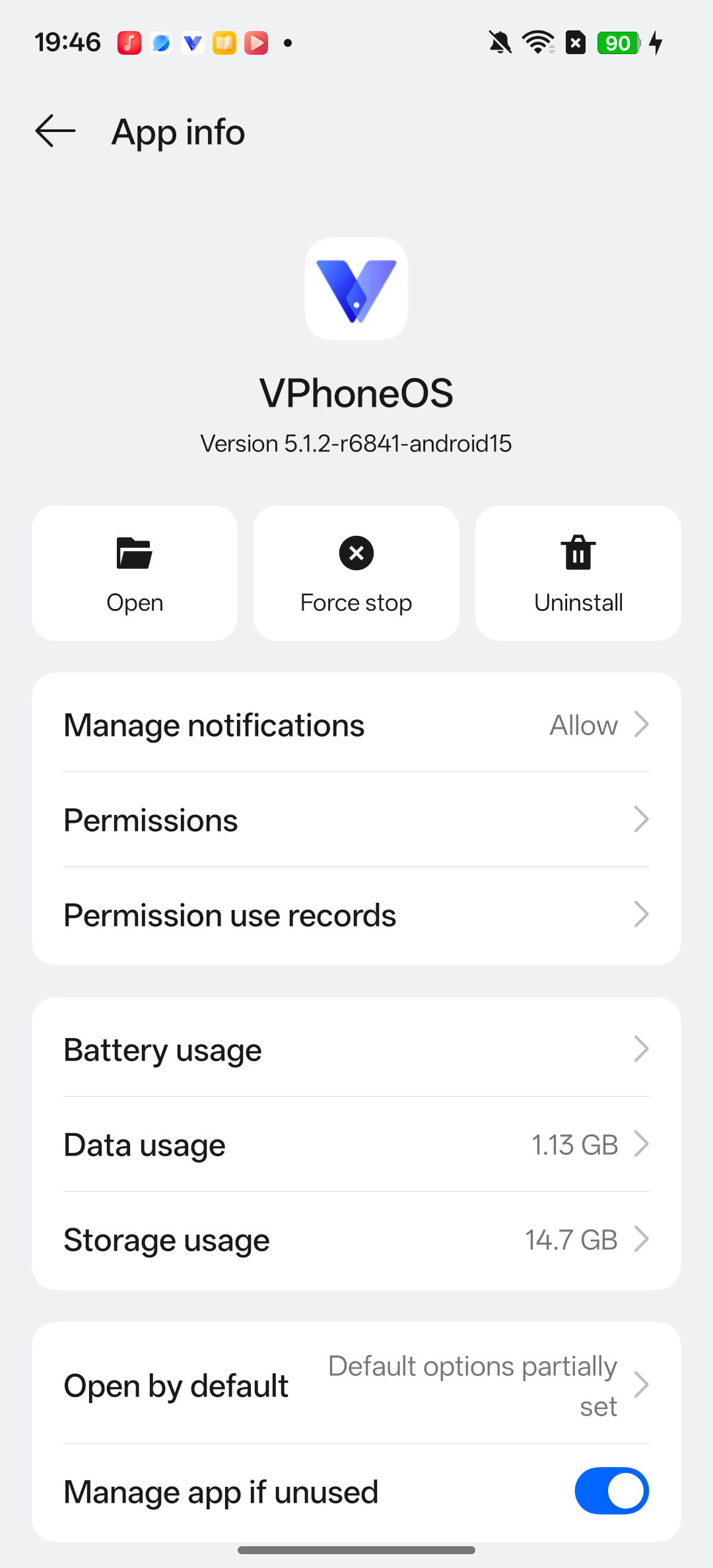
Open Battery usage or Data usage from the VPhoneOS App info page. Allow background data
App info → Data usage
Tap Data usage in App info. Check that Background data is on; turn it on if it is off. Keep Disable mobile data off if you use mobile data, and keep Disable Wi-Fi off if you use Wi-Fi. Leave switches that already match these settings unchanged.
Check the result Background data is on, and the disable switch for each network you need is off.
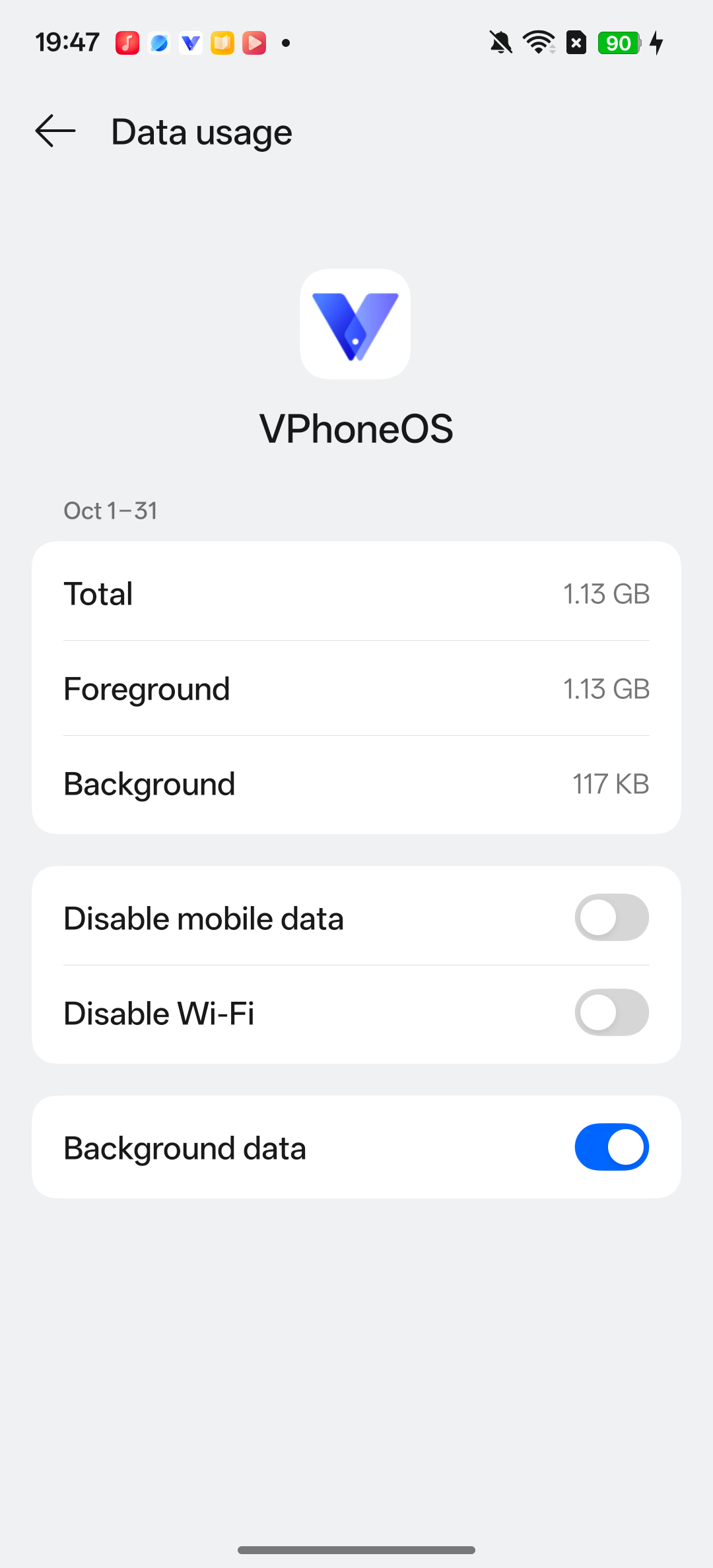
Background data is on. Disable mobile data and Disable Wi-Fi are both off. Choose Allow background activity
App info → Battery usage → Allow background activity → Allow
Return to VPhoneOS App info and tap Battery usage. Under Power consumption controls, select Allow background activity. Read the battery-use notice in the confirmation dialog and tap Allow. When the dialog closes, check that the radio button beside Allow background activity is selected. If it was already selected, leave it as it is.
Check the result Allow background activity remains selected on the Battery usage page.
Allowing more background activity may increase battery use.
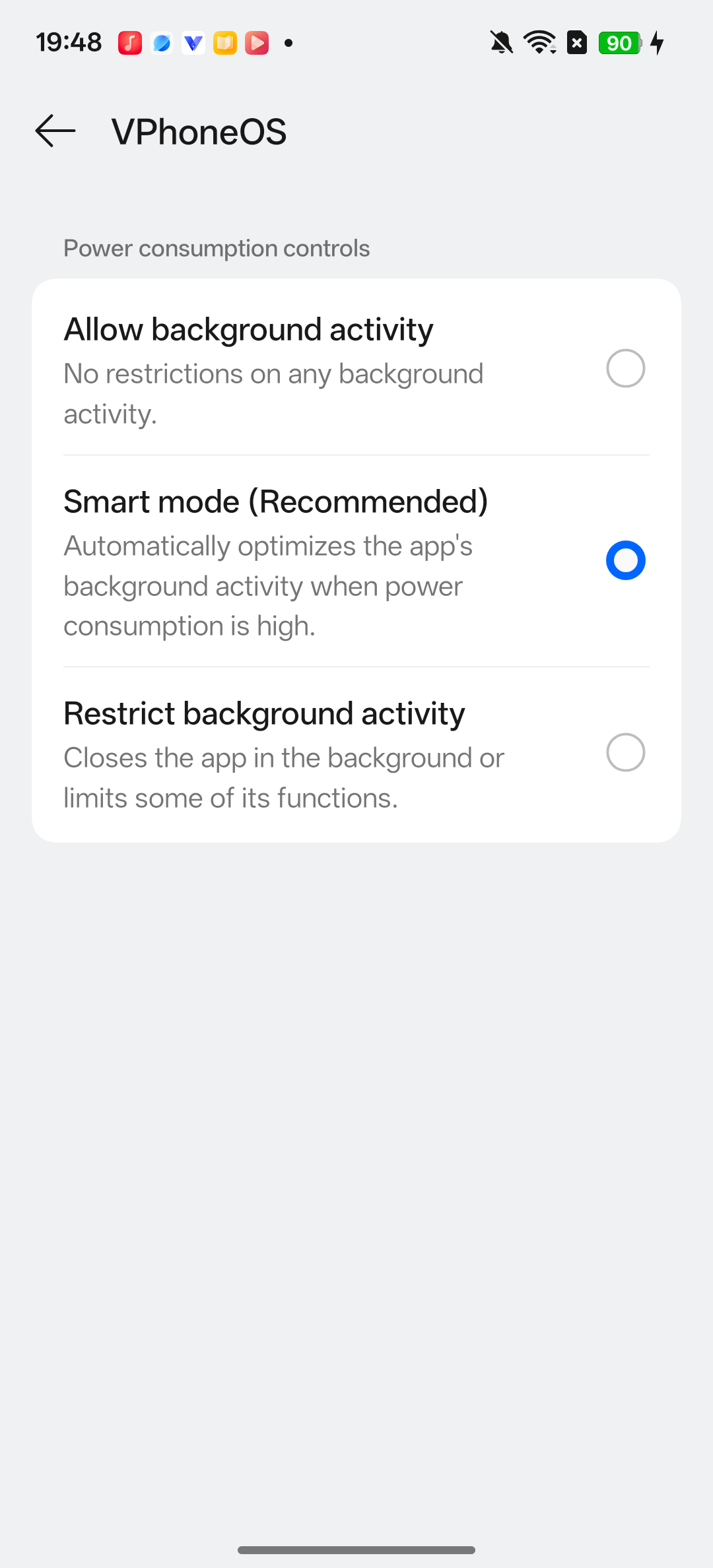
Select Allow background activity from the Power consumption controls page. 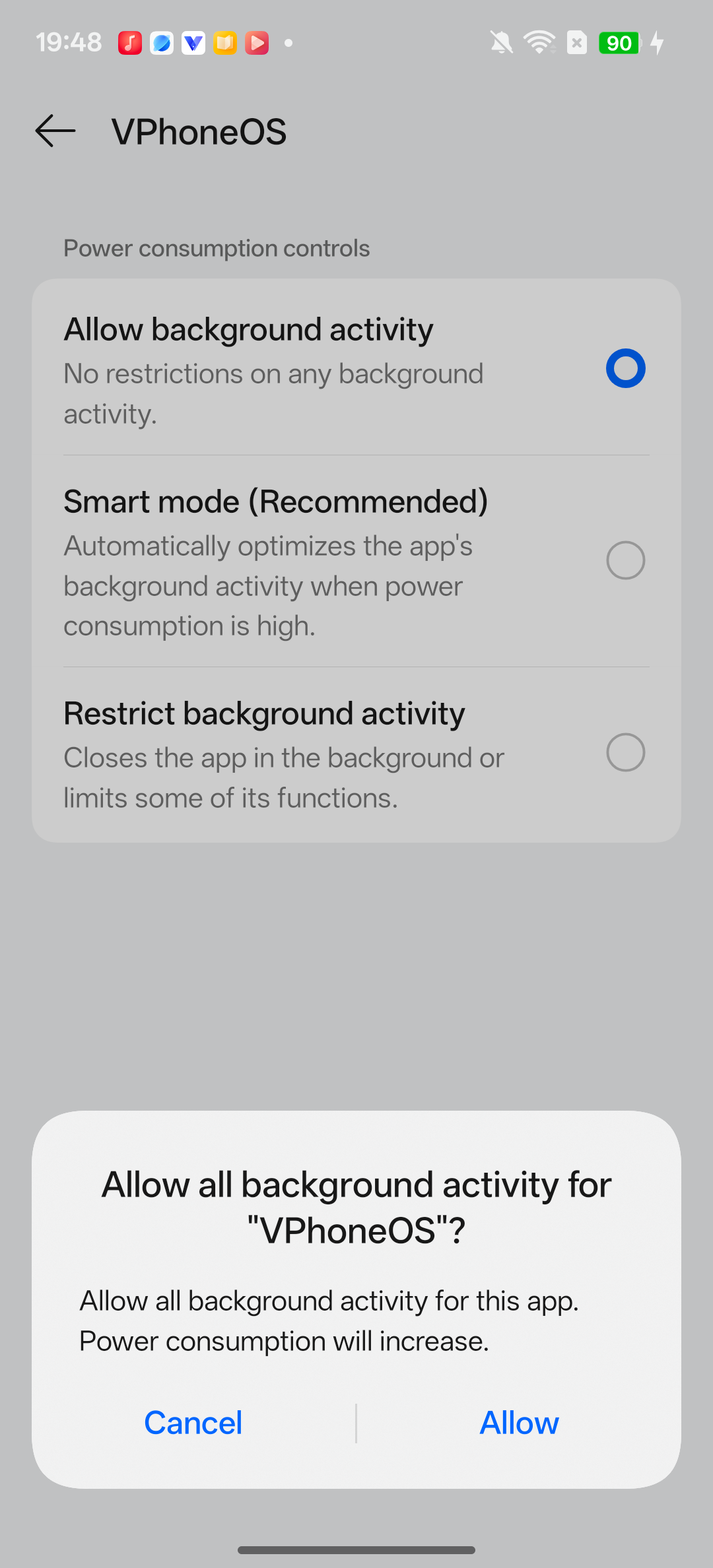
Read the power-consumption notice, then tap Allow to continue. Lock the app card in Recent apps
Recent apps → VPhoneOS card menu → Lock
Open Recent apps again and find VPhoneOS. Tap the three-dot menu along the card’s top edge, then tap Lock. Check for a lock icon beside the app name. Reopening the same menu should show Unlock instead of Lock. Use the phone’s recent-app card menu for this action.
Check the result A lock icon appears beside VPhoneOS, and the card menu offers Unlock.
After setup, open the app or game inside your virtual machine, then switch to the phone’s Home screen or another app. Return later and check progress and the connection. A lock icon does not guarantee that the app kept running.
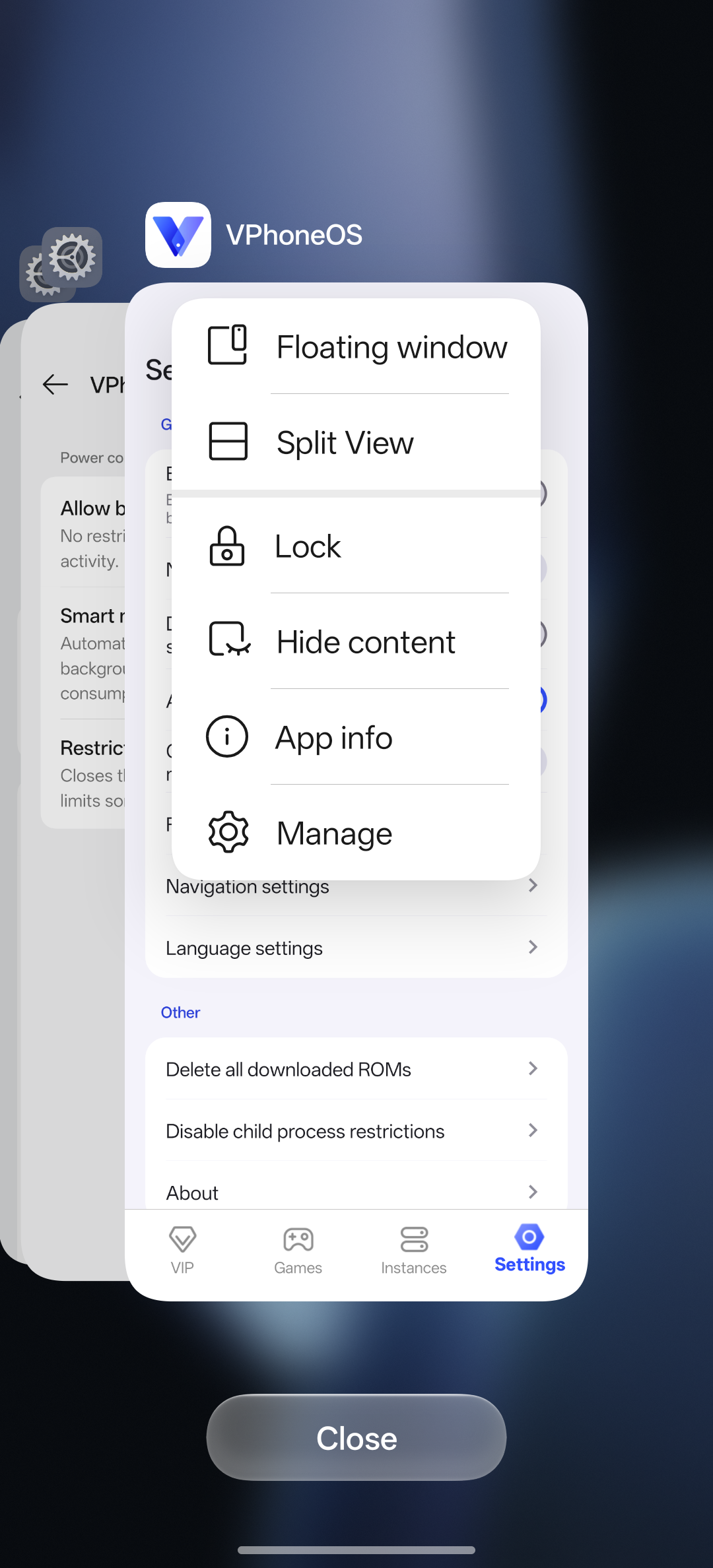
Open the VPhoneOS card menu in Recent apps, then choose Lock. 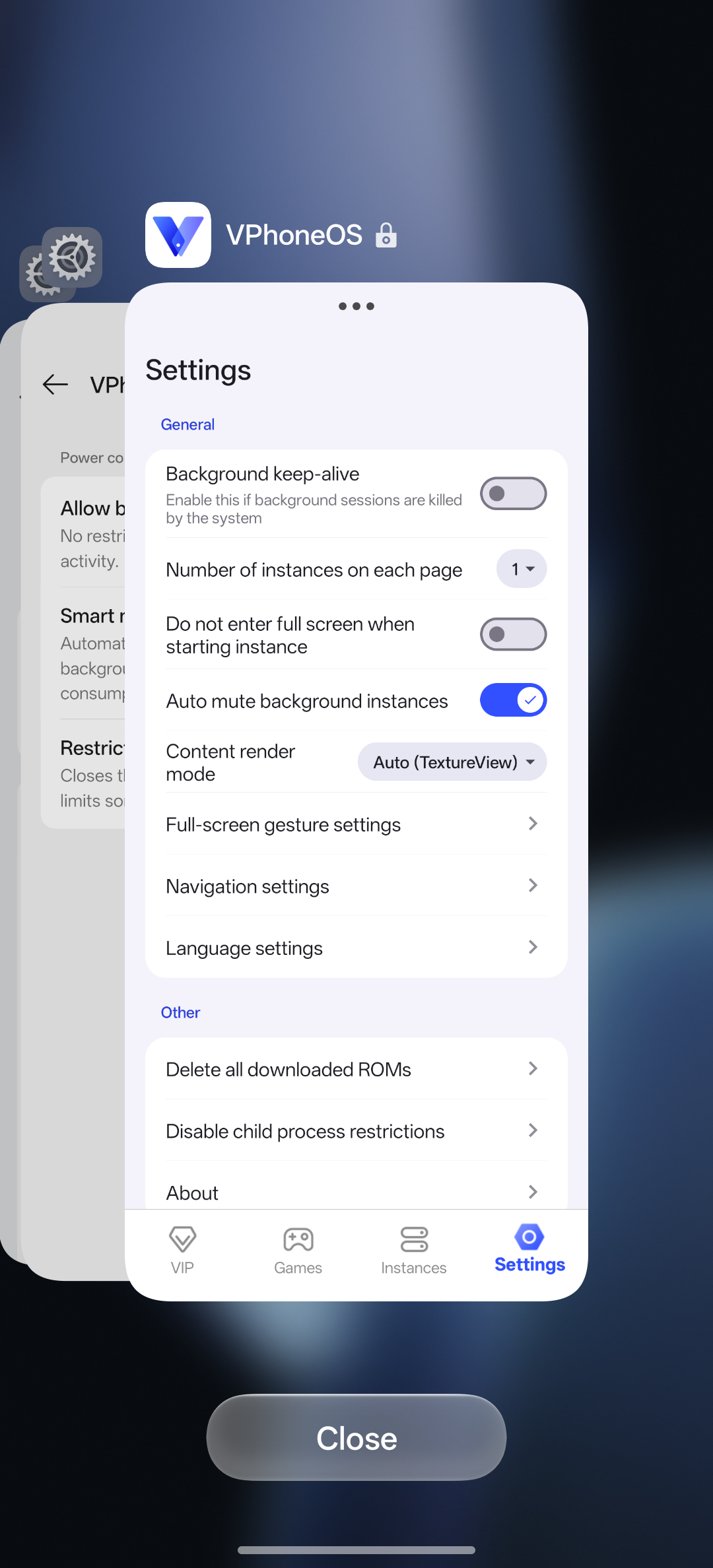
A lock icon beside VPhoneOS confirms that its recent-app card is locked. Optional: turn off Sleep standby optimization
Settings → Battery → Power saving settings under Battery settings → Sleep standby optimization
If your virtual machine still stops during standby, open Settings → Battery. Scroll to Battery settings → Power saving settings and turn off Sleep standby optimization. Leave the page and open it again to check that the switch stayed off.
Check the result Sleep standby optimization is off.
This affects the whole phone and may increase standby battery use. Keep your existing setting if you do not need this adjustment.
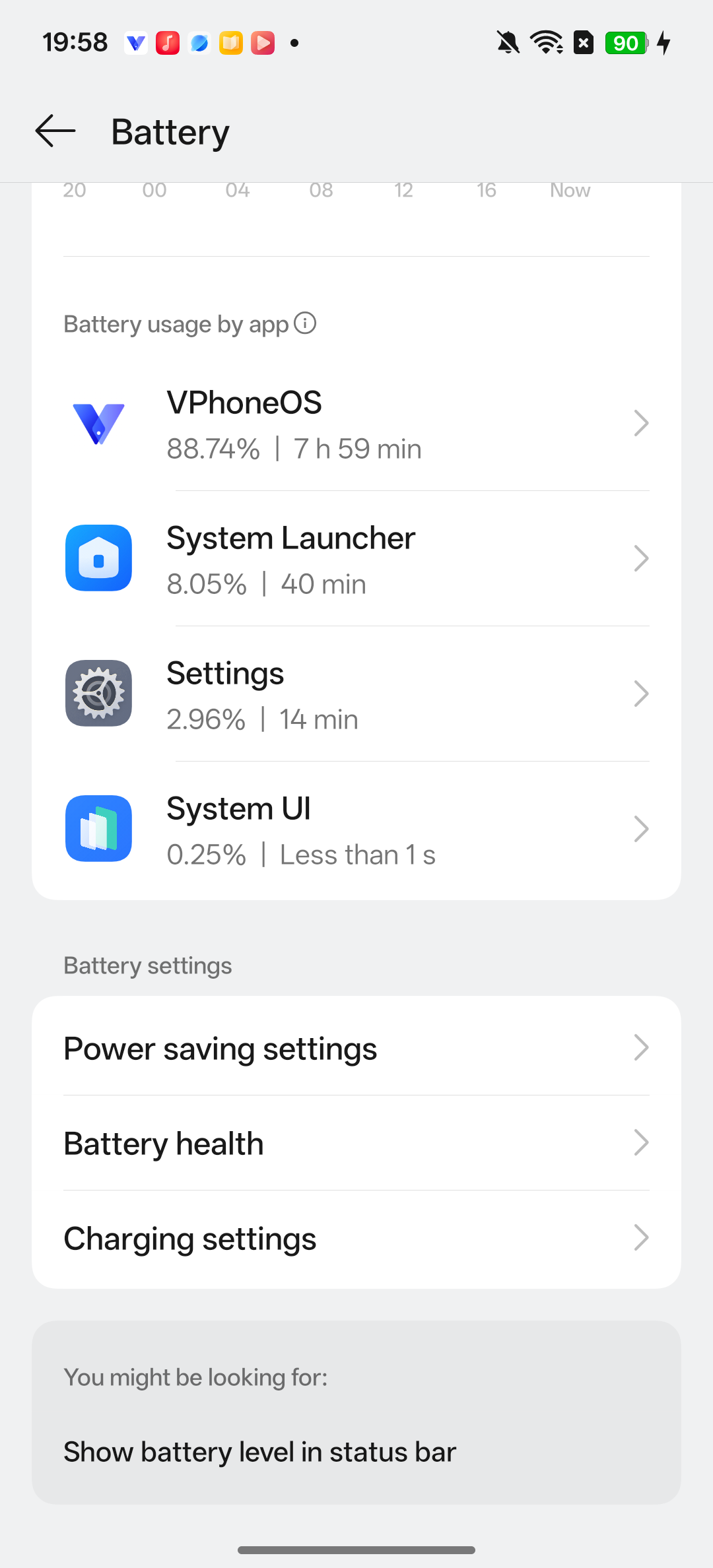
Scroll down on the Battery page and open Power saving settings under Battery settings. 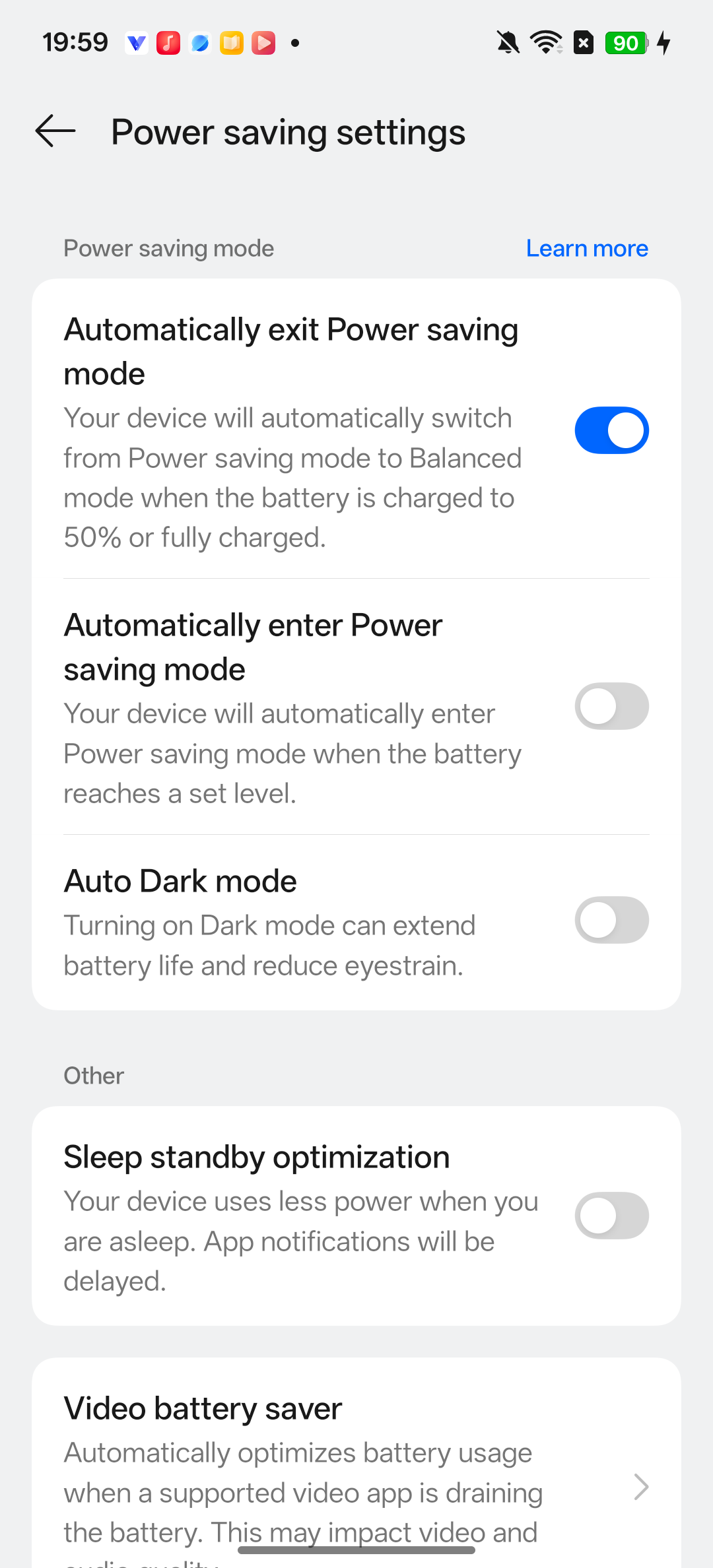
If needed for troubleshooting, turn off Sleep standby optimization and check that the switch is off.
Start screen-off mode and return to the app
These steps use the game-management and screen-off controls in the older Game Assistant, as shown in the pictures. If your newer Game Center does not have them, these steps will not work.
Check that Game Assistant is enabled
Settings → System & update → Enhancement services
Open the phone’s Settings → System & update → Enhancement services and turn on Game Assistant, or leave it on if already enabled. If the legacy interface also provides App enhancement service, enable that item too.
Check the result Game Assistant remains on. App enhancement service is also on if shown as a separate item in the legacy interface.
In newer Game Center versions, go to Me → the Settings icon at the top right → Game Assistant to check the game-tools switch. This page does not add apps or start screen-off mode. You do not need to change other enhancement services or resolution settings.
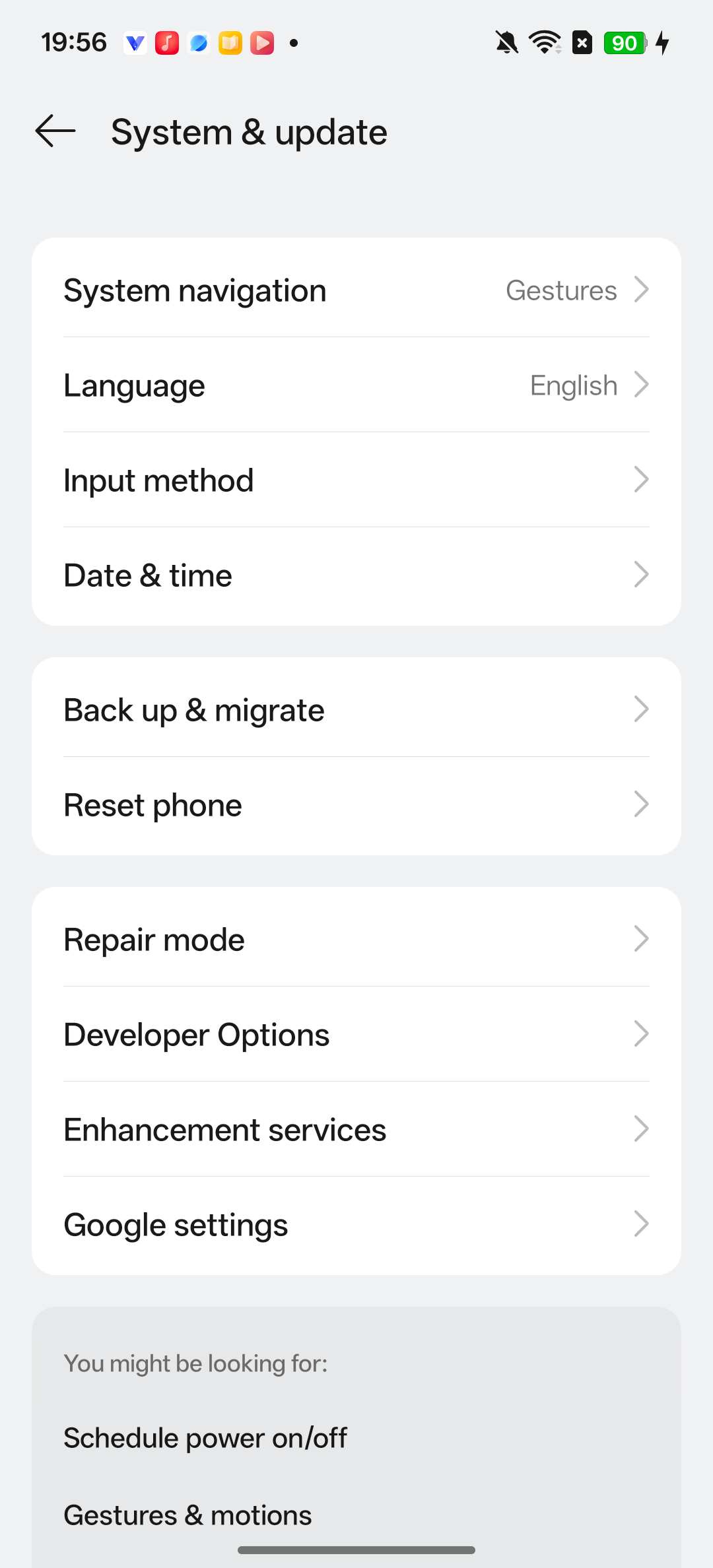
In the phone’s Settings, open System & update, then Enhancement services. 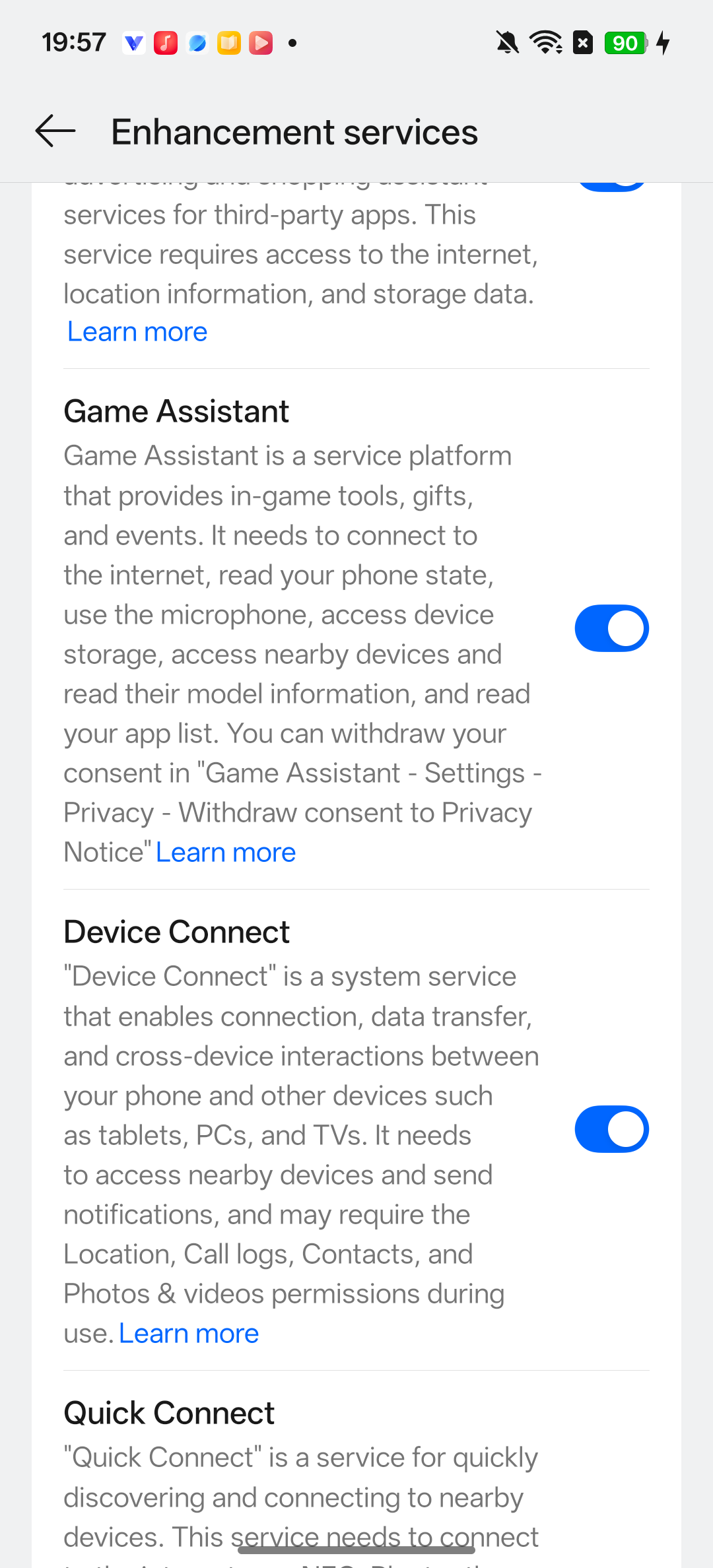
Game Assistant is on. Other, unrelated services on this page do not need to be changed. Open the game tools and add VPhoneOS
Standalone Game Assistant → + → game management
Open the official standalone Game Assistant. Tap + beside the game list, open game management, and enable VPhoneOS. Return to the game list and check that the app has been added.
Check the result VPhoneOS appears in the game tool’s managed list and is enabled.
If the legacy standalone Game Assistant is not installed, look for it in the phone’s official app store and install it if available. Open it directly if already installed.
Start your app or game
Managed game list → VPhoneOS → your virtual machine → app or game
Open VPhoneOS from the game-tool list and start the virtual machine you want to use. When its desktop appears, open your app or game and check that it is running normally.
Check the result The virtual machine and app or game have started, and you can see progress.
Open the toolbox and start screen-off mode
Upper-left screen edge → Game Assistant toolbox → game screen-lock function
Swipe inward from the upper-left screen edge to open Game Assistant. Open the tools panel and select the game screen-lock function. Follow any on-screen confirmation, then read how to resume control on the resulting screen.
Check the result The game screen-lock screen and instructions for resuming control are visible.
Swipe to resume and check the original task
Game screen-lock screen → swipe to unlock → original virtual machine and task
Follow the prompt and swipe anywhere to unlock. Return to your virtual machine and check the app or game’s progress, connection and whether it restarted.
Check the result The app is interactive again, and you can check the original task’s progress and connection.
Use the exit gesture shown on your phone. Save your progress when finished, and restore the phone’s previous sleep setting if you no longer need the change.
Frequently asked questions
Will locking the card keep my app running?
There is no guarantee. The network, memory, battery settings and the app itself can affect running. A lock icon or screen-off display is not enough; return to your virtual machine and check progress.
Why is there no separate Game Assistant icon?
Some versions put game tools inside Game Center. Go to Me → the Settings icon at the top right → Game Assistant to check the switch. If the newer version has no app-adding or screen-off controls, the older steps will not apply.
Must I enable auto-launch and disable every battery-saving setting?
You do not need to change everything. Start with background data, battery use and card locking. If the problem remains, check Sleep standby optimization. Check autostart and other battery settings separately, based on your phone’s instructions and the problem.
Is Disable child process restrictions configured here too?
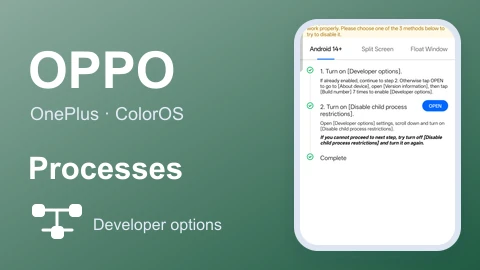
No. It is in the phone’s Developer Options. See the related guide for the steps. Background data, battery use and game tools still need their own settings.